

MESC

INSTRUMENTATION & PROCESS CABLES
Product Description
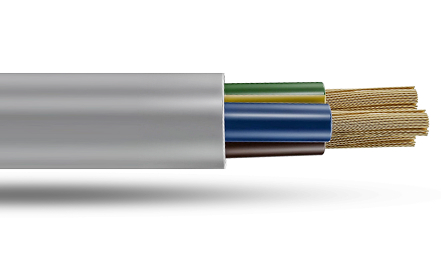
INSTRUMENTATION & PROCESS CABLES
A comprehensive range of instrumentation and process cables designed for industries where manufacturing and processing operations are controlled, monitored, and measured using electronic and digital systems.
For applications requiring enhanced safety performance, fire-resistant cables are available to meet special operational and regulatory requirements.
Instrumentation cables are single or multi-pair/triad cables engineered for signal transmission. They are primarily used to connect instruments and electrical equipment in process-controlled environments.
These cables are widely applied in facilities where signals generated by transducers are transmitted to panels, controllers, and other monitoring devices.
BS EN 50288-7: The current European harmonised standard for multi-element metallic cables used in analogue and digital communication and control.
- BS 5308 / PAS 5308: Although technically withdrawn and superseded by EN 50288-7, these British Standards remain widely specified, particularly in the petrochemical industry, because they cover specific dimensions and higher voltage ranges not always addressed by the newer European standard.
- Part 1: Typically specifies Polyethylene (PE) insulation for petrochemical and hazardous areas.
- Part 2: Typically specifies Polyvinyl Chloride (PVC) insulation for general industrial use
- UL 13 / UL 2250: North American standards covering Power-Limited Circuit Cables (Type PLTC) and Instrumentation Tray Cables (Type ITC).
- IEC 60092-376: Specifically for control and instrumentation circuits on ships and offshore units with a voltage rating of 150/250V (300V).
- NF M 87-202: A common French standard specifically for the petroleum industry.
Key Performance & Material Standards
Cables must often comply with secondary standards for safety and reliability:
- Conductors: IEC 60228 / EN 60228 – Defines nominal cross-sectional areas and resistance for solid, stranded, and flexible conductors.
- Fire Performance: IEC 60332-1 & IEC 60332-3 – Tests for flame retardancy and flame spread on bunched wires.
- Smoke & Toxicity: IEC 61034 / IEC 60754 – Measures smoke density and acidity of gases released during combustion (important for LSZH cables).
- Hazardous Areas: IEC 60079-11 & IEC 60079-25 – Requirements for cables used in intrinsically safe (IS) systems.
- Thermocouples: ANSI MC 96.1 / IEC 60584-3 – Standards for thermocouple extension and compensating cables.
Typical Construction Parameters
To meet these standards, cables generally feature:
- Twisted Pairs/Triads: To reduce electromagnetic noise and crosstalk.
- Shielding (Screening): Individual or overall screens (usually aluminium/polyester tape) with a tinned copper drain wire to protect signal integrity.
- Armouring: Galvanized steel wire (SWA) or tape for mechanical protection in buried or harsh environments.



Brand Certificates


Enquire now
Reach out to us to co-create public impact and transformation using our end-to-end advisory services and digital solutions.